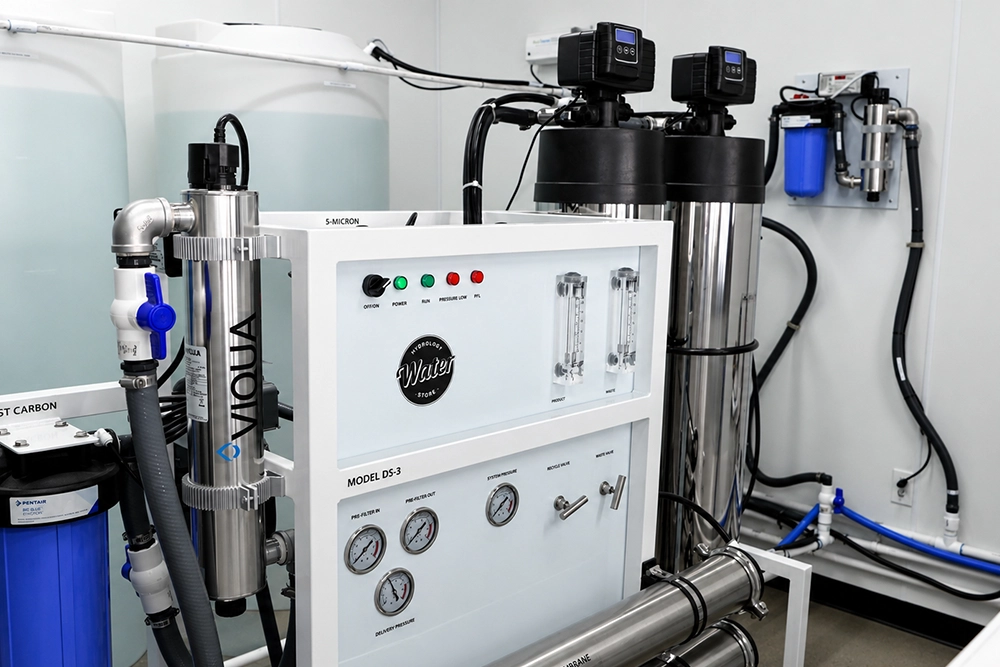
Learn essential commercial water filtration maintenance tips, replacement schedules, warning signs, and system care for Arizona businesses.
Commercial water filtration maintenance means inspecting filters, tracking pressure and flow, replacing cartridges or media on schedule, and testing treated water so your system keeps protecting your equipment. In Mesa and the greater Phoenix area, hard water makes that routine especially important.
For restaurants, coffee shops, breweries, and other commercial facilities, water plays an important role in everyday operations. Understanding how to maintain your filtration system can help you avoid unexpected interruptions and make more informed decisions about servicing and filter replacement.
In this guide, we'll explain the essential maintenance tasks, common warning signs, replacement considerations, and practical ways to care for commercial filtration systems, including those operating in Arizona's challenging water conditions.
Why Commercial Water Filtration Maintenance Matters
Commercial filtration systems work continuously or frequently to treat the water used throughout a facility. Depending on the system, they may reduce sediment, chlorine, certain minerals, or other substances that affect water quality and equipment.
As filters collect contaminants and treatment components experience wear, their performance can change.
Routine maintenance helps you:
- Maintain consistent water quality for daily operations.
- Reduce the likelihood of clogged filters and restricted water flow.
- Identify potential equipment problems before they become more serious.
- Support the performance of appliances and water-using equipment.
- Extend the useful life of filtration components when properly maintained.
- Plan filter replacements and servicing around business operations.
Maintenance needs vary by system design, incoming water quality, and usage. A commercial kitchen with heavy daily water demand may require a different maintenance approach than an office building with relatively limited water consumption.
Essential Maintenance Tasks
A good maintenance routine involves more than replacing filters. Commercial systems contain multiple components that may require inspection, cleaning, testing, or professional servicing.
1. Inspect Filters and Replace Them When Needed
Filters gradually collect sediment and other substances from incoming water. As they become loaded, water flow may decrease, pressure loss may increase, or treatment performance may decline.
The correct replacement schedule depends on several factors:
- Filter type and manufacturer specifications
- Volume of water processed
- Incoming water quality
- System capacity and design
- Operating conditions and usage patterns
For example, a sediment prefilter may need attention sooner when incoming water contains substantial suspended particles.
Follow the manufacturer's instructions and use compatible replacement components. Some commercial systems also have pressure gauges or monitoring devices that help indicate when service is needed.
2. Monitor Water Pressure and Flow
Changes in water pressure can be an early indication that a filtration system requires attention.
Watch for reduced flow at connected equipment, unusual pressure differences across filters, or inconsistent water delivery during normal operations.
A pressure drop may indicate a loaded filter, but it can also result from plumbing restrictions, valve problems, or other equipment issues.
If the system has pressure gauges, record readings under similar operating conditions and compare them with the manufacturer's recommended limits.
3. Check System Connections and Components
Regular visual inspections can help identify issues that might otherwise go unnoticed.
Look for:
- Water leaks around filter housings and connections
- Moisture or corrosion near fittings
- Damaged tubing or plumbing
- Unusual equipment noises
- Visible wear on accessible components
- Warning lights or error messages on control equipment
Do not open pressurized filter housings or attempt repairs without following the appropriate shutdown and pressure-release procedures.
For commercial systems, professional inspection may be the safest approach when problems involve electrical components, pressurized vessels, or complex treatment equipment.
4. Clean and Sanitize Components as Required
Some filtration systems require periodic cleaning or sanitization to control buildup and maintain suitable operating conditions.
However, cleaning procedures differ significantly among sediment filters, activated carbon systems, water softeners, and reverse osmosis equipment.
Always follow the manufacturer's approved procedures and cleaning products. Using unsuitable chemicals or attempting to clean disposable filter cartridges can damage components or compromise water quality.
5. Test Water Quality
A filtration system may continue delivering water even when certain treatment components are no longer performing effectively.
Periodic water testing can help determine whether the system is meeting its intended treatment goals.
Depending on the equipment and application, testing may include hardness, total dissolved solids (TDS, a measure of the minerals and other substances dissolved in water), chlorine or chloramine levels, and other relevant water quality parameters.
The appropriate tests should reflect the contaminants the system is designed to address.
For businesses that depend on specific water characteristics, such as coffee shops or food-service operations, monitoring treated water quality can be particularly useful.
How Often Should Commercial Water Filters Be Replaced?
There is no single replacement interval that applies to every commercial filtration system.
A filter's service life depends on its capacity, the quality of incoming water, and the amount of water passing through it.
The following maintenance checklist can help businesses organize routine inspections.
Commercial Water Filtration Maintenance Checklist
Daily or During Routine Operations
- Watch for unusual changes in water pressure or flow.
- Check for visible leaks and equipment alerts.
- Report changes in treated water quality.
Monthly or at Manufacturer-Recommended Intervals
- Inspect accessible filter housings and connections.
- Review pressure readings and monitoring information.
- Check maintenance records and upcoming service requirements.
At Scheduled Service Intervals
- Replace cartridges or treatment media when required.
- Perform approved cleaning or sanitization procedures.
- Inspect valves, seals, and other serviceable components.
- Conduct relevant water quality testing.
Periodically Through Professional Servicing
- Evaluate overall filtration performance.
- Inspect complex treatment components.
- Review system capacity against current business water demand.
- Update the maintenance schedule when operating conditions change.
This checklist is a general planning guide, not a replacement for equipment-specific instructions. Certain systems require more frequent attention, while others use longer service intervals.
Warning Signs Your Commercial Filtration System Needs Maintenance
Recognizing early warning signs can help businesses address filtration problems before they interfere with normal operations.
Reduced Water Flow
A noticeable decline in flow may indicate that a filter is becoming restricted. Check system monitoring information and consider whether the change affects one fixture or multiple connected applications.
Changes in Water Taste or Odor
Unexpected changes in treated water may indicate that certain filtration media are approaching the end of their effective service life.
However, taste and odor alone cannot establish whether water is safe. Appropriate testing is needed to evaluate specific water quality concerns.
Visible Leaks
Leaks around housings, valves, or connections should be addressed promptly. Even a small leak can worsen and damage surrounding equipment or property.
Increased Mineral Buildup
Scale accumulation on fixtures or equipment may indicate a change in water treatment performance, particularly where a softening or scale-control system is installed.
Because not all filtration systems remove hardness minerals, it is important to identify which treatment process is responsible.
Frequent Equipment Problems
If connected equipment repeatedly experiences flow restrictions, scaling, or water-related performance issues, the filtration system may need evaluation.
These problems can have multiple causes, so a proper assessment should consider both the filtration equipment and the connected appliances.
Commercial Water Filtration Maintenance in Arizona
Businesses in Mesa and the greater Phoenix area often encounter water quality conditions that influence filtration system selection and maintenance.
Hard water is a common consideration in the region. Dissolved calcium and magnesium can contribute to mineral deposits in certain water-using appliances and plumbing components.
For restaurants, coffee shops, and other commercial operations, these deposits may affect equipment such as water heaters, dishwashers, and beverage preparation systems.
Arizona businesses should consider several factors when planning filtration maintenance.
Water Hardness
Facilities using water-softening equipment should monitor hardness levels and follow the manufacturer's salt replenishment, regeneration, and servicing recommendations.
Sediment and Incoming Water Conditions
Sediment levels can vary by water source and plumbing conditions. Sediment filters may require more frequent replacement when particle loading is high.
Water Consumption
High-volume commercial operations may exhaust filter capacity more quickly than facilities with lower daily usage.
Seasonal and Operational Changes
Changes in business activity, equipment use, or incoming water conditions can affect treatment demand. Maintenance schedules should be reviewed when these conditions change significantly.
If you're not sure your current system still fits your facility's water or demand, our commercial water filtration team can review it with you. For more on local water conditions, see our page on water filtration in Mesa.
Common Maintenance Mistakes to Avoid
Even a well-designed system can experience problems when maintenance is overlooked.
Waiting Until Water Flow Becomes Noticeably Restricted
By the time a filter causes a significant flow reduction, its condition may already be affecting connected equipment. Use the manufacturer's replacement criteria rather than waiting for a major problem.
Using Incompatible Replacement Filters
A replacement cartridge must match the system's specifications, including dimensions, flow requirements, and intended treatment function.
Ignoring Maintenance Records
Without service records, it becomes harder to determine when filters were replaced, identify recurring problems, or recognize changes in system performance.
Assuming All Filtration Systems Need the Same Maintenance
A sediment filtration system, water softener, activated carbon unit, and reverse osmosis system have different maintenance requirements.
Skipping Water Quality Testing
Visual inspections alone cannot confirm that treatment equipment is removing the intended substances effectively.
Attempting Complex Repairs Without Proper Training
Commercial systems may contain pressurized equipment, electrical controls, and specialized components. Some repairs should be handled by qualified professionals.
How to Create a Maintenance Plan
A written maintenance plan makes it easier to organize routine care and reduce unexpected servicing needs.
Start by identifying the filtration equipment installed at your facility and reviewing its manufacturer's maintenance instructions.
Next, document the system's normal operating conditions, including pressure readings, water usage where measurable, and relevant treated water quality results.
Assign responsibility for routine observations and maintenance records. Staff members can report unusual changes, while qualified service providers can perform tasks requiring specialized equipment or training.
If you are still choosing or resizing equipment, our guide to commercial water filtration systems in Arizona explains how systems are built for different facilities.
Finally, review the plan periodically. If your business expands, adds water-using equipment, or experiences changes in incoming water quality, the filtration system may require a different maintenance approach.
A practical maintenance plan should be specific enough to guide daily operations while remaining flexible as your business needs change.
When to Schedule Professional Service
Some maintenance tasks, such as observing pressure readings or checking for visible leaks, can be incorporated into routine facility inspections.
Other situations call for professional evaluation.
Consider arranging service when:
- Water quality testing indicates reduced treatment performance.
- Filter replacements do not resolve persistent flow problems.
- Equipment repeatedly displays alarms or error messages.
- Leaks involve pressurized components.
- Treatment media or specialized system components require servicing.
- Your facility's water demand has changed significantly.
- You are unsure whether the existing filtration system meets current operating requirements.
Professional evaluation can help identify whether a problem involves routine maintenance, equipment condition, or system capacity.
Keep Your Commercial Water Filtration System Performing Reliably
Regular commercial water filtration maintenance helps protect the performance of your treatment system and supports consistent water quality throughout your facility.
By monitoring water flow, following appropriate filter replacement schedules, testing treated water, and addressing warning signs early, your business can reduce avoidable interruptions and make better maintenance decisions.
If your business in Mesa, Gilbert, Chandler, Scottsdale, or another area we serve needs guidance with its commercial water treatment requirements, our team at Hydrology Water Store can help you explore suitable filtration solutions.
Call us at (602) 560-4107 or visit our commercial filtration page to discuss your facility's water treatment needs.
Frequently Asked Questions About Commercial Water Filtration Maintenance
How often should a commercial water filtration system be serviced?
Service frequency depends on the system type, manufacturer requirements, incoming water quality, and water consumption. Follow the equipment's maintenance schedule and adjust it when operating conditions or performance indicate additional attention is needed.
What happens if commercial water filters are not replaced?
Overdue filter replacement may cause reduced flow, increased pressure loss, or declining treatment performance. The consequences depend on the filter type and how it is used within the system.
Can a commercial water filtration system be cleaned instead of replacing the filters?
Some filtration components are designed for cleaning, backwashing, or regeneration. Others, including many disposable cartridges, must be replaced. Always follow the manufacturer's instructions.
How do I know if my commercial water filtration system is working properly?
Monitor operating conditions, check for leaks and alerts, and conduct water quality testing appropriate to the system's treatment purpose. Water appearance or taste alone is not a reliable measure of performance.
Does Arizona's hard water affect commercial filtration maintenance?
Hard water can contribute to scale formation in equipment and plumbing. Facilities using water softeners or scale-control equipment should follow the relevant maintenance procedures and monitor treatment performance.
Can regular maintenance extend the lifespan of a commercial filtration system?
Proper maintenance can help prevent avoidable wear, identify component problems, and support the system's expected service life. Actual equipment lifespan depends on system design, operating conditions, and maintenance history.