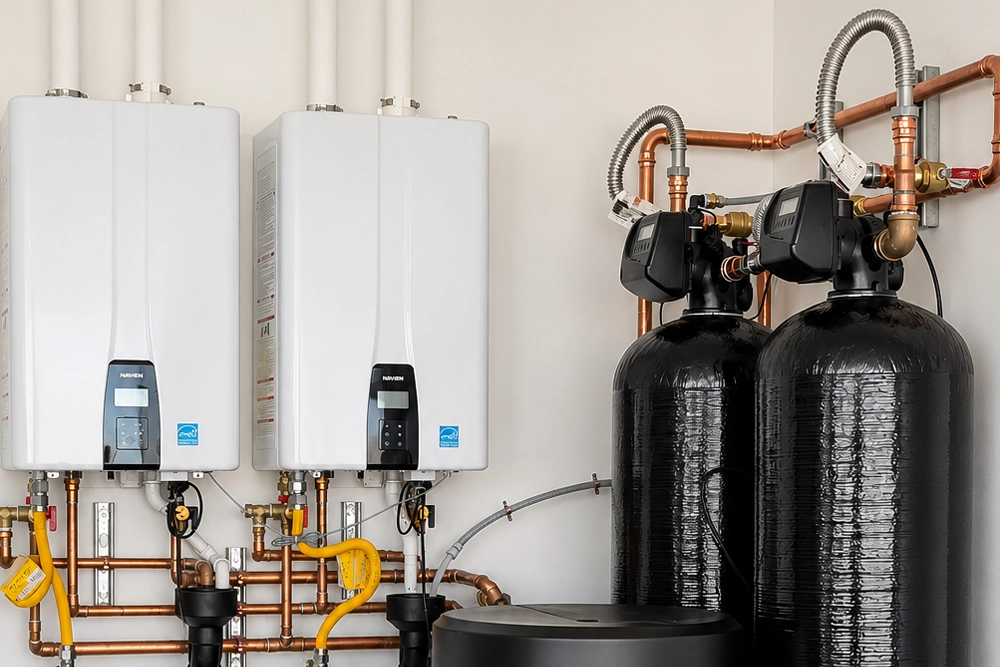
Learn how to choose a well water filtration system for home based on water testing, sediment, hardness, iron, and other common well water concerns.
Cloudy water, mineral buildup, staining, sediment, or an unusual taste can make it tempting to assume that any well water filter will solve the problem. But well water filtration systems are not one-size-fits-all. Two homes can have very different water conditions and may require completely different treatment.
The right well water filtration system for your home should be selected based on what is actually in your water, not simply on the filter with the longest feature list. Private well water can contain different minerals, sediment, dissolved substances, or microorganisms depending on the well and surrounding conditions, so testing should come before choosing treatment.
That distinction matters because a filter designed to trap sediment solves a very different problem from a water softener, reverse osmosis system, iron treatment system, or ultraviolet disinfection unit.
For homeowners in Mesa, understanding your water first can help you avoid installing equipment that does not address the actual issue. In this guide, we’ll explain how home well water filtration works, the types of treatment you may encounter, how whole-house filtration differs from drinking-water filtration, and what to consider before choosing the right system for your home.
Start With Well Water Testing
One of the biggest mistakes homeowners can make is choosing filtration based only on how the water looks, smells, or tastes.
Those symptoms can provide useful clues, but they do not necessarily reveal everything that may be present in the water.
Testing helps answer the most important question:
What exactly are you trying to remove or correct?
A water test may help identify conditions such as:
- Sediment
- Hardness
- Iron
- Manganese
- Dissolved minerals
- pH concerns
- Other water-quality issues
At Hydrology Water Store, our approach to well water testing and treatment starts with understanding the water before determining which treatment options may be appropriate.
Even wells located relatively close to one another can have different water conditions, which is why selecting a system based on testing is more useful than assuming the same equipment will work for every home.
What Problems Can a Well Water Filtration System Address?
A well water treatment system may contain more than one treatment stage because different water-quality concerns require different solutions.
Here are some common issues homeowners may encounter.
Sediment and Visible Particles
Sand, silt, rust particles, and other suspended material can sometimes enter water from the well or plumbing system.
A sediment filter is designed to capture these particles before they move farther into the home's plumbing or other treatment equipment.
Sediment filtration may also be used as a pretreatment stage before additional filtration.
Hard Water
Hard water is associated primarily with dissolved calcium and magnesium.
A water softener addresses hardness differently from a standard particle filter. Instead of simply trapping debris, a softener is designed to reduce the minerals responsible for hardness.
If hard water is one of several issues identified through testing, a softener may become one part of a larger whole-house water treatment system.
Iron and Manganese
Iron and manganese can contribute to issues such as:
- Staining
- Discoloration
- Metallic tastes
- Deposits on fixtures or surfaces
The appropriate treatment depends on the specific water conditions.
That is why visible staining alone should not be used to select equipment. Testing provides more useful information for determining what type of treatment may be needed.
Taste and Odor Concerns
Unusual taste or odor may come from several different sources.
Certain filtration media, including activated carbon, may be used for some taste and odor concerns, but the correct approach depends on what is actually causing the problem.
Instead of choosing a filter based solely on the symptom, identify the source first and then choose treatment designed for that particular issue.
Microbiological Concerns
Some private wells may also require consideration of microbiological water quality.
If testing identifies this type of concern, a standard sediment or carbon filter may not be enough. Different treatment technologies, such as disinfection systems, may be considered depending on the specific condition.
This is another reason water testing should come before selecting equipment.
Whole-House Filtration vs. Drinking Water Filtration
Another important decision is determining where the water needs to be treated.
Some problems affect water throughout the entire home, while others may primarily concern water used for drinking and cooking.
Whole-House Water Filtration
A whole-house well water filtration system treats water as it enters the home before it reaches individual fixtures.
This type of treatment may be appropriate when the water-quality concern affects:
- Showers
- Bathroom faucets
- Kitchen faucets
- Laundry
- Appliances
- Plumbing fixtures
Whole-home systems can use different combinations of treatment technologies depending on what the water test identifies.
Our whole-home water filtration systems are designed to address water quality throughout the property rather than at only one faucet.
Point-of-Use Drinking Water Systems
A point-of-use system treats water at a specific location, most commonly the kitchen sink.
Reverse osmosis is one example of this type of treatment.
These systems are generally intended for drinking and cooking water rather than treating every gallon of water entering the home.
Depending on the water conditions and the homeowner's goals, a property may use both whole-house treatment and separate drinking-water filtration.
What Is the Best Water Filter for Well Water?
There is no single filter that is automatically the best choice for every private well.
A more useful question is:
Which treatment process matches the conditions found in your water?
For example, a home primarily dealing with sediment may need a very different system from one dealing with hardness, iron, or multiple water-quality concerns.
A practical selection process includes:
- Test the well water. Identify the conditions that actually need to be addressed.
- Determine where treatment is required. Decide whether the issue affects the entire home or primarily drinking water.
- Match the treatment technology to the results. Avoid assuming that one filter removes everything.
- Consider household water demand. A whole-house system should be sized appropriately for the property.
- Review maintenance requirements. Filters, media, membranes, and other components may require ongoing service.
- Review manufacturer information. Understand what the equipment is specifically designed to address.
Choosing a system this way helps keep the focus on solving the actual water-quality problem rather than simply adding more filtration equipment.
Why System Size and Water Flow Matter
Choosing the correct treatment technology is only part of selecting a whole-house well water filtration system.
The equipment must also be able to handle the amount of water your household uses.
Several fixtures may operate at the same time, especially during busy parts of the day. A filtration system therefore needs to provide adequate flow without unnecessarily restricting the home's water supply.
Important considerations may include:
- Household size
- Number of bathrooms
- Typical water usage
- Well flow
- Existing plumbing
- Number of treatment stages
A properly planned system should consider both the water-quality issue and how water moves through the home.
Do Well Water Filtration Systems Require Maintenance?
Yes. Well water treatment equipment generally requires ongoing maintenance to continue operating as intended.
The specific maintenance depends on the type of system installed.
It may include:
- Replacing sediment cartridges
- Replacing carbon filters
- Changing treatment media when required
- Servicing reverse osmosis filters or membranes
- Maintaining a water softener
- Inspecting treatment equipment
- Following manufacturer service recommendations
Some filters physically collect material from the water, while other treatment components gradually lose their effectiveness over time.
Before choosing a system, ask what maintenance it requires and how easily replacement filters, media, or other components can be serviced.
What to Look for Before Choosing a Well Water Filtration System
A filtration system should be evaluated based on more than its product description or list of features.
Before deciding on a system, consider:
- What your water test identifies
- Which specific conditions need treatment
- Whether treatment is needed throughout the home or at a single faucet
- Household water demand
- Water flow requirements
- Available installation space
- Maintenance requirements
- Replacement filters or media
- Manufacturer performance information
- Any relevant third-party certifications
The goal is not to find the system with the most components. It is to choose equipment that addresses the conditions present in your water. Our guide to the best water filtration system for home use compares whole home, reverse osmosis, carbon, sediment, and softening options.
Do You Need More Than One Type of Well Water Treatment?
Sometimes.
A single filter may be enough when the water-quality concern is relatively straightforward. Other properties may require multiple stages because they are dealing with several different conditions.
For example, a treatment setup could potentially include separate stages for:
- Sediment
- Hardness
- Iron or manganese
- Taste and odor
- Drinking water filtration
The appropriate combination depends on the results of the water test and the goals for the home.
This is why the phrase well water filtration system often refers to an overall treatment setup rather than one individual filter.
How to Avoid Choosing the Wrong Well Water Filter
One of the easiest ways to end up with the wrong system is to choose equipment based only on a visible symptom.
For example:
You see staining.\ That may indicate a water-quality issue, but the appearance alone does not tell you the concentration or complete water chemistry.
You notice sediment.\ A sediment filter may help with particles, but it will not necessarily address dissolved minerals or other concerns.
Your water tastes unusual.\ A carbon filter may be appropriate for certain causes, but the source of the taste should still be identified.
You have hard water.\ A standard filtration cartridge is different from equipment designed to address hardness.
The better approach is to identify the problem first and then select treatment.
Well Water Filtration for Homes in Mesa
For homeowners in Mesa using private well water, the first step toward choosing filtration should be understanding the water itself.
Once you know what needs to be addressed, you can evaluate treatment options based on the actual conditions instead of relying on assumptions from staining, sediment, taste, or another visible symptom.
At Hydrology Water Store, we are a veteran-owned, family-run water store and filtration company. Our team can help you explore well water testing and treatment options based on the needs of your home.
If you're trying to determine which type of well water filtration system may be appropriate for your property, call us at (602) 560-4107 or contact us through our website to discuss your water.
Frequently Asked Questions
Does Every Well Need a Filtration System?
Not necessarily. The need for treatment depends on the condition of the water. Testing helps identify whether treatment is needed and which problems should be addressed.
What Type of Filter Is Best for Well Water With Sediment?
A sediment filter is designed to capture suspended particles such as sand, silt, and rust. If testing identifies additional water-quality concerns, sediment filtration may be only one stage of a larger treatment system.
Do I Need a Water Softener and a Well Water Filter?
Possibly. Water softeners and filters perform different functions. A softener primarily addresses hardness, while filtration may target sediment or other water-quality issues. Testing can help determine whether one or both types of treatment are appropriate.
Is Reverse Osmosis the Same as Whole-House Filtration?
No. Reverse osmosis is commonly used to treat drinking water at a specific faucet, while whole-house filtration treats water before it is distributed throughout the home.
A property may use both depending on its water conditions and treatment goals.
Should Well Water Be Tested Before Installing Filtration?
Yes. Testing provides information about what is actually present in the water and helps guide the selection of appropriate treatment equipment.