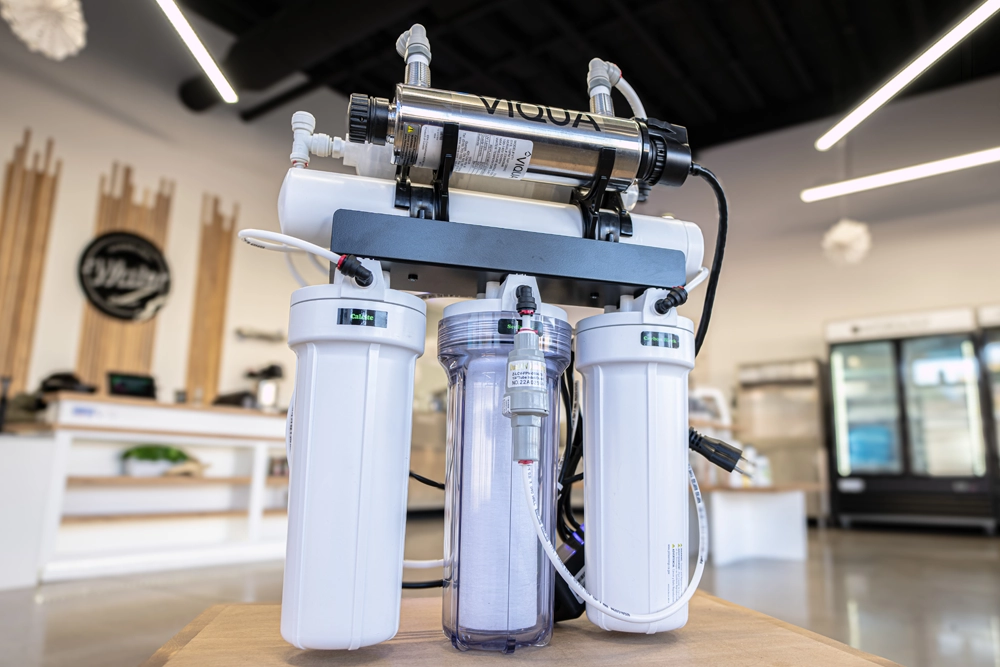
Find the best water filtration system for home use in Arizona. Compare filtration types, hard water solutions, and key factors for choosing the right system.
Selecting the best water filtration system for home use in Arizona requires an understanding of local water conditions, household consumption, and specific treatment requirements. Depending on water quality concerns, homeowners may benefit from whole-home filtration, water softening, or dedicated drinking water treatment systems.
Arizona households commonly encounter water hardness, mineral accumulation, and variations in the taste and odor of municipal water. Because filtration technologies serve different purposes, selecting an appropriate system requires careful consideration of their capabilities and limitations.
At Hydrology Water Store, we assist homeowners in identifying water treatment solutions suited to their individual requirements. This guide examines the primary types of residential water filtration systems, their applications, and the factors Arizona homeowners should evaluate before making a selection.
Understanding Water Quality in Arizona Homes
Water quality can vary considerably depending on the municipality, water source, and individual property. Homes throughout Mesa, Gilbert, Chandler, and Greater Phoenix may receive water from different combinations of groundwater and surface water sources.
These variations influence which water treatment systems make sense for your household.
Hard Water and Mineral Buildup
Hard water contains dissolved minerals, primarily calcium and magnesium, that can accumulate on plumbing fixtures, household surfaces, and water-using appliances.
Common indicators of hard water include:
- White mineral deposits around faucets and showerheads
- Water spots on dishes and glassware
- Scale accumulation in water heaters
- Reduced soap and detergent lather
- Mineral residue on shower doors and bathroom surfaces
Conventional sediment and activated carbon filters are not designed to substantially reduce dissolved hardness minerals. Water softening or appropriate scale-control technology may be necessary to address these conditions.
Chlorine Taste and Odor
Municipal water suppliers commonly use disinfectants to control microorganisms within water distribution systems.
Although disinfection is essential for public water treatment, you may notice chlorine-related tastes or odors in your tap water.
Activated carbon filtration can reduce certain disinfectants when the equipment is designed and certified for that use.
Sediment and Suspended Particles
Sediment may enter residential plumbing systems through source water, distribution infrastructure, or existing plumbing conditions.
Sediment filtration systems are designed to capture suspended particles, including sand, silt, and rust. However, these systems do not remove dissolved minerals or all chemical contaminants.
Private Well Water Considerations
Properties that rely on private wells may require additional water quality assessments.
Unlike municipal water supplies, private wells are not regulated by the EPA and are generally not subject to the same routine public water monitoring requirements.
Laboratory testing, such as our well water testing, can identify potential concerns involving bacteria, nitrates, arsenic, iron, and other substances relevant to your water source.
Treatment recommendations should be based on verified water quality results rather than assumptions about potential contaminants. Our guide to well water filtration systems for home covers well-specific treatment in more detail.
Types of Home Water Filtration Systems
Residential water treatment technologies differ in their filtration processes, contaminant reduction capabilities, and installation needs.
Understanding these distinctions helps you evaluate which systems fit your home.
1. Whole Home Water Filtration Systems
Whole home filtration systems, also known as point-of-entry systems, treat water before it is distributed throughout the property.
Depending on the filtration media, these systems may reduce sediment, chlorine, certain organic compounds, and other targeted substances. For a step-by-step look at the process, see how a whole home water filtration system works.
Best for: homes that want treated water at every faucet, shower, and appliance.
2. Reverse Osmosis Filtration Systems
Reverse osmosis systems use semipermeable membranes to reduce many dissolved substances in water.
Residential reverse osmosis equipment is commonly installed beneath kitchen sinks to provide treated water for drinking and food preparation. Learn more about reverse osmosis systems for Arizona homes.
Best for: households that want targeted drinking water treatment based on specific water quality needs.
3. Activated Carbon Filtration Systems
Activated carbon filtration uses adsorption to reduce certain substances that contribute to undesirable water tastes and odors.
These systems are available in several configurations, including countertop units, under-sink filters, refrigerator filters, and whole home treatment systems.
Best for: chlorine-related taste and odor concerns, or contaminants covered by the selected product's performance certification.
4. Water Softening Systems
Traditional ion-exchange water softeners reduce dissolved calcium and magnesium by exchanging these minerals for sodium or potassium ions.
Although water softeners operate differently from conventional filtration equipment, they remain an important treatment option for Arizona properties experiencing hard water.
Best for: households that want to reduce hardness-related mineral deposits and scale accumulation.
5. Sediment Filtration Systems
Sediment filtration systems remove suspended particles such as sand, silt, and rust from incoming water.
These filters are frequently incorporated into multi-stage treatment configurations to protect downstream equipment.
Best for: properties with particle-related water quality concerns, or as pretreatment before additional filtration stages.
Comparing the Best Water Filtration Options for Arizona Homes
The following comparison outlines the primary functions and typical residential applications of common water treatment technologies.
| Filtration System | Primary Function | Residential Application |
|---|---|---|
| Whole home filtration | Reduces selected contaminants throughout the property | Multiple household fixtures |
| Reverse osmosis | Reduces many dissolved substances | Drinking and cooking water |
| Activated carbon | Reduces certain taste, odor, and chemical concerns | Drinking water or whole home treatment |
| Water softener | Reduces calcium and magnesium hardness | Household scale management |
| Sediment filtration | Captures suspended particles | Pretreatment and particle reduction |
These technologies are not necessarily interchangeable. In certain applications, combining treatment methods may provide a more comprehensive solution.
For example, a household experiencing both hard water and chlorine-related taste concerns may need separate treatment processes to address each condition effectively.
How to Choose the Best Water Filtration System for Your Home
Selecting the right residential filtration system involves evaluating your existing water conditions, household needs, and equipment specifications.
1. Assess Your Water Source
The first consideration is whether your property receives municipal water or relies on a private well.
If you're on municipal water, you can review your utility provider's annual Consumer Confidence Report for information about regulated contaminants and water quality.
If you rely on a private well, appropriate laboratory testing will establish your treatment needs.
2. Identify Specific Water Quality Concerns
Water treatment equipment should be selected according to the conditions it is intended to address.
Common concerns include mineral accumulation, sediment, undesirable drinking water taste, and contaminants identified through testing.
Because filtration technologies differ in their capabilities, identifying your primary treatment goal helps prevent the selection of unsuitable equipment.
3. Evaluate Household Water Consumption
Household size, the number of bathrooms, connected appliances, and simultaneous water usage can influence how much filtration capacity you need.
Whole home filtration systems must be sized to handle anticipated water demand without creating excessive pressure restrictions.
4. Review Filtration Performance and Certifications
Independent product certifications provide valuable information about specific contaminant reduction capabilities.
Relevant NSF/ANSI standards for water treatment systems include:
- NSF/ANSI 42: Certain aesthetic effects, including specified taste and odor reduction claims.
- NSF/ANSI 53: Specified health-related contaminant reduction claims.
- NSF/ANSI 58: Performance requirements for reverse osmosis drinking water treatment systems.
Certification should be evaluated according to the specific product and contaminants covered. No single certification establishes that a system removes every potential contaminant.
5. Consider Maintenance Requirements
Residential water filtration systems need ongoing maintenance to keep performing as intended.
Depending on the equipment, maintenance may involve cartridge replacement, softener salt replenishment, pressure monitoring, or servicing filtration membranes and treatment media. Our salt and filter delivery service can help keep supplies on schedule.
Review the manufacturer's recommendations so you understand the maintenance each system needs.
6. Evaluate Professional Installation Requirements
Whole home water treatment equipment must be integrated properly with your home's plumbing.
Installation considerations may include system capacity, available water pressure, drainage, equipment placement, and applicable plumbing codes.
Professional evaluation can help determine whether the selected system is compatible with your home's existing plumbing.
Whole Home Water Filtration vs. Under-Sink Filtration
Whole home and under-sink filtration systems address different residential water treatment needs.
Whole Home Water Filtration
Whole home systems treat incoming water before distribution to multiple household fixtures.
This configuration may be appropriate when your treatment goals extend beyond drinking water and involve water used throughout the property.
System selection should account for the required flow rate, filtration capacity, and targeted substances.
Under-Sink Water Filtration
Under-sink systems provide treatment at a designated point of use, typically the kitchen sink.
These systems are commonly selected to improve drinking and cooking water quality.
Depending on their design, under-sink reverse osmosis systems may provide contaminant reduction capabilities that differ from conventional whole home carbon filtration.
Determining the Appropriate System
Neither configuration is universally superior.
A point-of-use system may be sufficient when your primary goal is drinking water treatment. Whole home filtration may be more appropriate when water quality concerns affect multiple fixtures.
Some homes may benefit from combining both approaches to address different treatment needs.
Does a Whole Home Water Filter Remove Hard Water Minerals?
Not all whole home filtration systems are designed to reduce water hardness.
Conventional sediment and activated carbon filtration media generally do not substantially remove dissolved calcium and magnesium.
If you're dealing with mineral accumulation, a dedicated water softener may be necessary.
Certain scale-control technologies can also help manage mineral deposits, although these systems do not necessarily remove hardness minerals from the water.
Understanding the distinction between filtration, softening, and scale control is essential when evaluating treatment equipment.
At Hydrology Water Store, we focus on customized water treatment solutions that account for your water quality and your household's needs.
You can explore our whole home water filtration services in Mesa for more information about available treatment options.
Common Mistakes to Avoid When Choosing a Home Water Filtration System
Selecting unsuitable equipment can result in inadequate treatment performance and unnecessary maintenance.
The following considerations can help you make a more informed decision.
Selecting Equipment Without Evaluating Water Quality
Treatment recommendations should be based on identified water quality concerns. Municipal water reports and appropriate laboratory testing provide useful information for evaluating your treatment needs.
Assuming All Filters Reduce Water Hardness
Conventional sediment and activated carbon filters are not substitutes for dedicated water-softening equipment.
Prioritizing the Number of Filtration Stages
A greater number of filtration stages does not automatically indicate superior performance. Each treatment component should serve a defined purpose supported by the system's specifications.
Overlooking Flow Rate Requirements
Improperly sized whole home filtration equipment may restrict water delivery during periods of increased household consumption.
Neglecting Maintenance Requirements
Failure to replace filters or maintain treatment components according to manufacturer recommendations can reduce system effectiveness.
Relying Exclusively on Water Appearance
Certain contaminants cannot be identified through taste, odor, or visual inspection. Appropriate testing is necessary when specific water quality concerns exist.
Choosing Water Filtration for Homes in Mesa and Greater Phoenix
Residential water treatment needs throughout Mesa and Greater Phoenix depend on several factors, including water source, mineral content, plumbing infrastructure, and household consumption.
Water hardness is a common consideration in Arizona, but it should not be the sole factor determining system selection.
For example, a household experiencing mineral deposits may need hardness treatment, while another property may prioritize filtration for drinking water quality.
Homes relying on private wells may require additional testing and specialized treatment considerations.
At Hydrology Water Store, our approach emphasizes understanding water quality conditions and identifying appropriate treatment technologies for the homes we serve.
Find the Right Water Filtration Solution for Your Arizona Home
The best water filtration system for home use should address identified water quality concerns, accommodate household consumption, and provide reliable performance when properly maintained.
Understanding the differences between whole home filtration, reverse osmosis, activated carbon, sediment filtration, and water softening allows you to make an informed treatment decision.
If you are evaluating residential water filtration options in Mesa, Gilbert, Queen Creek, Chandler, Scottsdale, or surrounding service areas, our team can help you explore solutions suited to your property.
Visit our Mesa water store or call us at (602) 560-4107 to talk through your options.
Frequently Asked Questions
What is the best water filtration system for home use in Arizona?
The most appropriate system depends on the property's water source and specific treatment needs. Water softeners address hardness, activated carbon filtration can reduce certain taste and odor concerns, and appropriately certified reverse osmosis systems can reduce many dissolved substances. Some households may need multiple treatment technologies.
Do Arizona homes need whole home water filtration?
Whole home filtration is not necessary for every property. Its suitability depends on incoming water quality, household needs, and treatment goals. Reviewing municipal water quality reports or conducting appropriate testing can help determine whether additional treatment is warranted.
Is reverse osmosis better than whole home filtration?
These systems serve different purposes. Reverse osmosis is commonly used for drinking water treatment, while whole home filtration treats water distributed to multiple fixtures. The appropriate selection depends on the intended application.
Can a water filtration system remove hard water?
Certain treatment technologies, including reverse osmosis, can reduce dissolved hardness minerals in treated drinking water. However, conventional sediment and carbon filters generally do not. Whole home hardness reduction typically requires a water softener or another appropriately designed treatment system.
How often should residential water filters be replaced?
Replacement intervals depend on filter specifications, incoming water quality, consumption, and manufacturer recommendations. Follow the applicable maintenance schedule and monitor system performance.
Should you test your water before buying a filtration system?
Water testing is particularly beneficial for properties using private wells or experiencing specific water quality concerns. If you're on municipal water, you can start by reviewing your utility provider's water quality report and arrange additional testing when necessary.